Types of Gold Electroplating Equipment
Rack Plating Equipment
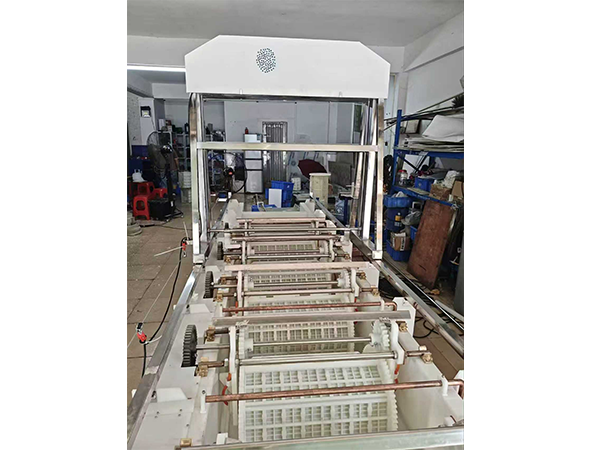
Rack plating systems suspend workpieces on racks or hooks and immerse them into the plating tank for electroplating. This method is ideal for high-precision components with strict quality requirements, such as jewelry and precision hardware parts.
Rack plating equipment can be operated manually or configured as a fully automatic plating line. Automatic rack plating lines significantly improve production efficiency and ensure consistent coating thickness and quality.
Vibratory Plating Equipment
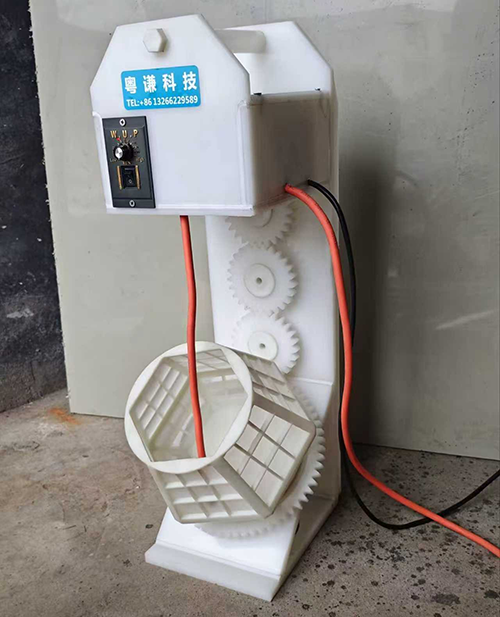
Vibratory gold plating equipment, such as compact vibratory gold plating machines, utilizes high-frequency vibration technology. By precisely controlling vibration amplitude and frequency, workpieces continuously move within the plating solution, improving coating uniformity. This type of equipment is especially suitable for mass gold plating of small parts, such as electronic components.
Laboratory Electroplating Equipment
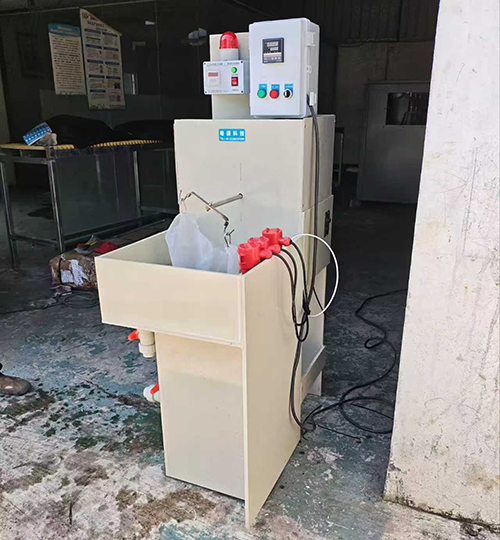
Laboratory electroplating systems, such as small precious metal test plating tanks, are compact devices designed for gold, silver, and other precious metal electroplating in laboratories. They are suitable for process development, deposition research, and small-batch functional coating preparation. These systems feature a small footprint, flexible operation, and precise parameter control, making them ideal for R&D in microelectronic gold plating processes.
Main Components of the Equipment
Plating Tank
The plating tank is typically made of PTFE (Teflon), PVDF, or quartz glass, offering excellent chemical corrosion resistance and high-temperature tolerance to meet the requirements of gold plating solutions. Laboratory tanks usually have a capacity of 1–50 liters, while industrial production tanks are available in much larger volumes.
Electrode System
The electrode system includes soluble or insoluble anodes, such as gold anodes or titanium-based DSA anodes, as well as cathodes (the workpieces to be plated). Anodes are fixed using anode hangers and protected with anode bags or baskets to prevent contamination. The cathode position can be adjusted to optimize electrode spacing.
Temperature Control System
The equipment is equipped with quartz heaters or jacketed thermal oil heating systems. The temperature control range typically extends from ambient temperature up to 250°C, with control accuracy of ±0.1°C to ±1°C. A PID temperature controller ensures stable and precise temperature control for optimal gold plating performance.
Agitation and Filtration System
Magnetic or mechanical agitation systems are used in combination with circulation pumps. The electrolyte is filtered through 0.1 μm–5 μm filter cartridges or activated carbon columns to maintain solution purity and uniform composition, thereby improving coating quality.
Power Supply System
A DC power supply supports constant current, constant voltage, and pulse plating modes. It allows precise control of current density and voltage according to the gold plating process requirements, ensuring accurate coating thickness and superior coating quality.
Key Technical Parameters
Coating Thickness Control
Advanced gold electroplating equipment enables micron-level thickness control. For example, compact vibratory gold plating machines can achieve continuous gold layer thickness adjustment from 0.1 μm to 10 μm, with thickness deviation controlled within ±0.5 μm.
Coating Uniformity
By optimizing equipment design and process parameters—such as using 360° rotating vibratory baskets and well-engineered electrode layouts—excellent coating uniformity can be achieved, minimizing thickness variation across the entire workpiece surface.