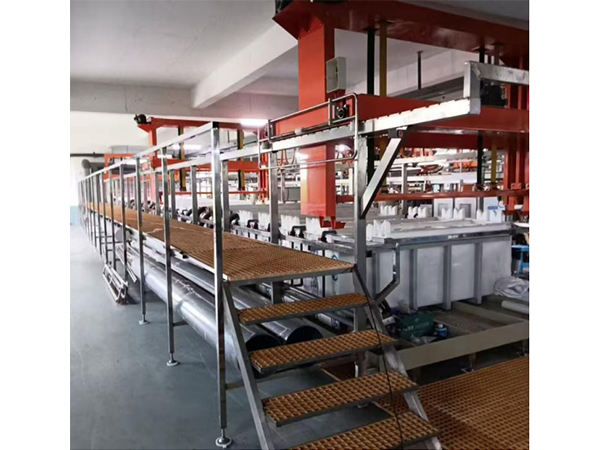
The intelligent production of electroplating equipment refers to the use of advanced information technology and automatic control technology to enable the equipment to achieve an automated, intelligent and high-efficiency production process. The introduction of intelligent technology can improve production efficiency, reduce energy consumption, enhance product quality, and realize the monitoring and management of the production process. This article will elaborate on the realization of intelligentization of electroplating equipment from the aspects of intelligent devices, data management, energy consumption monitoring and quality control.
First and foremost, intelligent devices form the foundation for the intelligentization of electroplating equipment, which mainly include sensors, actuators and control systems. Various sensors can be installed to monitor the operating status, temperature, pressure and other parameters of the equipment, and simultaneously collect all kinds of data generated during the production process in real time. Actuators can automatically adjust the working parameters of the equipment according to the instructions of the control system to realize the automatic control of the equipment. The control system is the core part for the integrated control of sensors and actuators, which achieves the collaborative operation between devices through communication with other equipment.
Secondly, data management is a crucial link in the intelligentization of electroplating equipment. A large amount of data can be collected by sensors and control systems, and the key lies in how to manage and analyze the data effectively. By establishing a database to classify, store and manage the data, it becomes convenient to query and analyze the data. Meanwhile, big data analysis technology can be utilized to mine and analyze the data, identify abnormal points and potential problems in the production process, and conduct early warning and optimization. In addition, machine learning and artificial intelligence technologies can be adopted to process and analyze the data for optimizing the production process and improving product quality.
Thirdly, energy consumption monitoring is one of the important components of the intelligentization of electroplating equipment. Energy consumption accounts for a large proportion of the cost in the electroplating process, so the monitoring and management of energy consumption can effectively improve the energy efficiency of the equipment. Energy consumption monitoring devices can be installed to monitor the energy consumption of the equipment in real time and transmit the data to the energy consumption management system for analysis and management. Through the analysis of energy consumption data, the energy consumption management system can identify peak energy consumption periods and abnormal energy consumption points, and carry out targeted optimization and adjustment, thereby reducing energy consumption costs.
Finally, quality control is another important content of the intelligentization of electroplating equipment. The introduction of intelligent technology enables real-time monitoring of the production process and quality control. Sensors can monitor parameters related to product quality, such as temperature, current and concentration. Through the analysis and processing of the data, a model of product quality indicators can be established to realize the prediction and control of product quality. At the same time, the control system can automatically adjust the working parameters of the equipment according to the changes in quality indicators, thus ensuring the stability of product quality.
To sum up, the intelligent production of electroplating equipment can be realized through improvements in intelligent devices, data management, energy consumption monitoring, quality control and other aspects. The introduction of advanced information technology and automatic control technology can improve production efficiency, reduce energy consumption, enhance product quality, and realize the comprehensive monitoring and scientific management of the production process.