Automotive Aluminum Anodizing Line | Automatic Anodizing Equipment for Auto Parts
1. Product Overview
The Automotive Aluminum Anodizing Line is designed for anodizing aluminum alloy components used in the automotive industry. It forms a uniform and dense aluminum oxide (Al₂O₃) coating on the surface, significantly enhancing:
Corrosion resistance
Wear resistance
Surface aesthetics
It is widely used for automotive wheels, roof rails, sunroof guides, interior trims, and structural components.
2. System Components
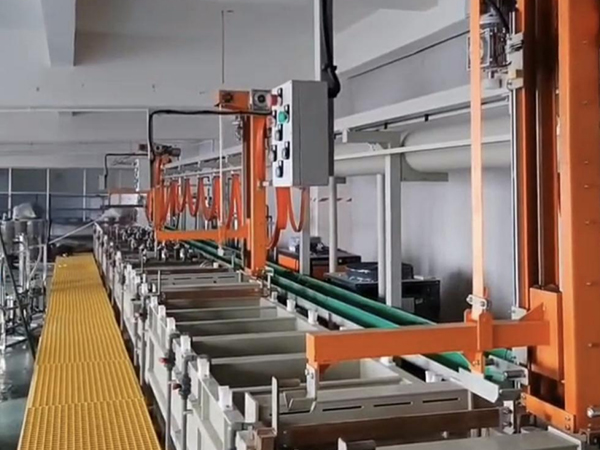
(1) Pretreatment System
Prepares the surface by removing contaminants:
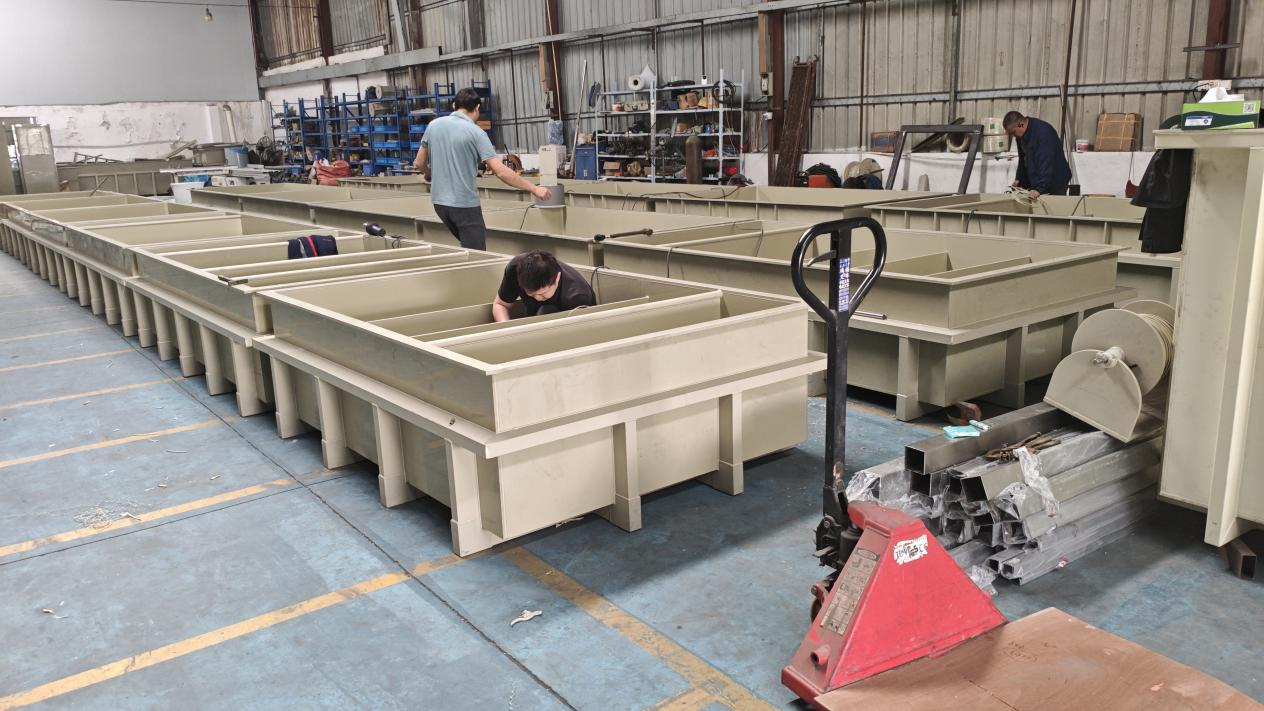
Pre-degreasing tank
Degreasing tank
Alkaline cleaning tank
Neutralization tank
Improves coating adhesion and quality.
(2) Anodizing System (Core Unit)
Anodizing tank
Anode conductive system (copper bars)
Cathode system (carbon plates or inert materials)
Rectifier power supply
The aluminum workpiece acts as the anode to form an oxide layer under electric current.
(3) Post-treatment System
Coloring tank (for decorative finishes)
Sealing tank (to close pores and enhance corrosion resistance)
(4) Auxiliary Systems
Including:
Rinsing tanks
Drying equipment
Pure water supply system
Wastewater treatment system
Exhaust gas treatment system
Ensures continuous and environmentally compliant production.
3. Working Principle
The aluminum workpiece is used as the anode in an electrolyte solution, with a cathode installed in the tank.
When DC power is applied:
The anode undergoes oxidation to form an aluminum oxide layer
The cathode undergoes reduction, releasing hydrogen gas
The coating thickness and properties are controlled by adjusting current, voltage, and processing time.
4. Automation Control
PLC + touchscreen control system
Supports automatic, semi-automatic, manual, and remote modes
Power failure memory and fault self-diagnosis
Real-time monitoring of process parameters
Ensures stable and intelligent operation.
5. Features
High Efficiency
Continuous operation
Suitable for mass production of automotive parts
High Stability
High-quality materials (e.g., carbon cathode plates)
Excellent conductivity and corrosion resistance
Environmental Protection
Equipped with wastewater and exhaust treatment systems
Meets environmental regulations
6. Applications
Mainly used in the automotive industry:
Automotive wheels
Roof rails
Sunroof guides
Interior trim parts
Structural components
Also applicable to:
Architectural aluminum
Home appliances
Furniture hardware
Industrial aluminum products
7. Conclusion
The automotive aluminum anodizing line is a critical solution for improving the durability, performance, and appearance of automotive components. It supports the industry’s transition toward high-quality, efficient, and environmentally friendly manufacturing.