

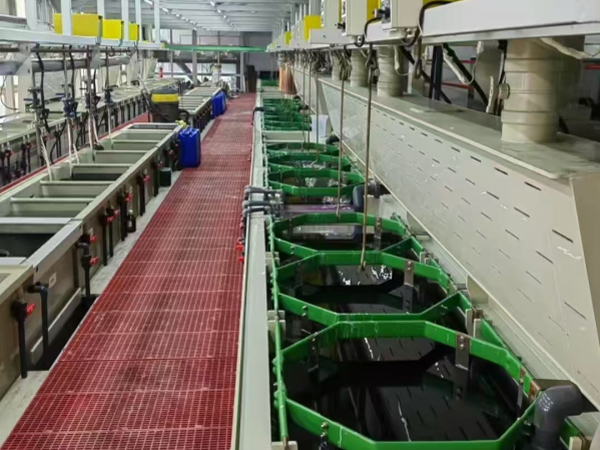
At present, anodizing equipment supports the dominant surface treatment process adopted in China. While multi-color coatings appeal greatly to architects, decorators and designers, organic polymer coatings feature far weaker UV resistance compared with anodic oxide films. For permanent architectural decorative applications, anodizing production lines are indispensable.
How to Improve the Startup Efficiency of Anodizing Equipment Production
First, scientifically calculate and define all operating indicators of the production line under actual working conditions, including water, electricity and compressed air consumption, aluminum material loss rate, consumption of all chemicals (including additives), staffing allocation and output capacity.
Film quality and surface appearance defects are the primary causes of rework. Even under standardized production technical parameters, issues in information-based quality management still occur. To address this problem, each working procedure in the manufacturing process must be inspected and verified. It is necessary to analyze the adverse impacts caused by misoperations in the previous process on subsequent working steps, as well as their influences on the final surface treatment quality of finished products. Where feasible, conduct comparative analysis among three dimensions: system operating parameters, material/chemical consumption and quality performance. Through this analysis, abnormal operating conditions can be identified, and major existing problems along with their root causes can be summarized.
Targeting the main technical bottlenecks existing in domestic aluminum profile anodizing and coloration processes, this paper selectively elaborates on specific functions of anodizing technology. Combined with domestic and foreign production experience and technical specifications, it also clarifies relevant technical indicators and key operational requirements.
Feed rods undertake two core functions: the fixing function, which secures aluminum profiles onto rods and transfers them from one treatment tank to another; and the electrical conduction function, which maintains stable electrical contact between the power supply and aluminum profiles.
Feed rods are usually made of pure aluminum or 6063 (LD31) aluminum alloy, so they corrode synchronously with aluminum profiles during anodizing. As corrosion proceeds, the rods gradually thin down with shrinking cross-sectional areas. If severely thinned feed rods are not replaced in a timely manner during production, both fixing and conductive performance will deteriorate. Excessively thin feed rods lead to ineffective power waste via thermal loss; corner corrosion on rods also results in poor electrical contact. Heavy loads may cause aluminum profiles to detach from rods, damaging auxiliary components such as tank pipelines, or even triggering short circuits and permanent power supply failure.
Furthermore, if fallen aluminum profiles are not retrieved from treatment tanks, chemical consumption will rise sharply and the service life of tank solutions will be shortened. For instance, when aluminum profiles drop into an alkaline degreasing tank and undergo rapid corrosion by alkaline liquid, the resultant alkali consumption equals that required for treating 50 to 100 standard profiles. In electrolytic coloring or sealing tanks, massive accumulated aluminum ions generated from corrosion drastically accelerate the aging of tank solutions and cut their service life short.