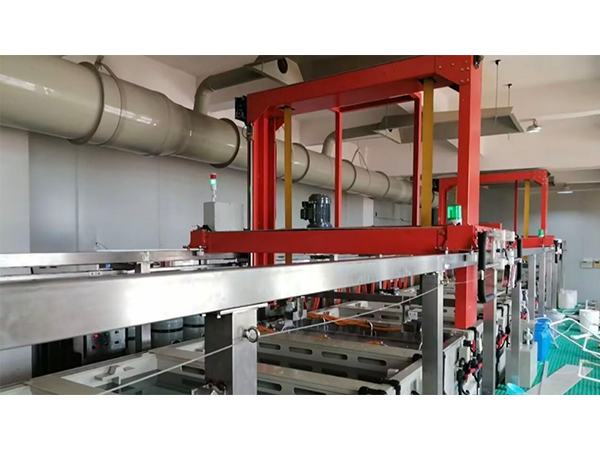
To fulfill electroplating processes in accordance with technical requirements, plastic electroplating equipment consists not only of power supplies and plating tanks, but also a range of auxiliary equipment to ensure smooth electroplating production.
1. Heating and Cooling Devices
Electroplating solutions must operate within specific temperature ranges, making heating and cooling equipment essential for electroplating tanks. For instance, bright nickel plating requires a solution temperature of 50℃; chromium plating requires a temperature range of 50℃ to 60℃; and acid bright copper plating or bright silver plating requires a temperature below 30℃. Heat exchange devices are deployed to meet these precise process temperature requirements. Direct heating is commonly adopted for solution heating in practical production.
2. Cathode Movement and Stirring Devices
Most electroplating processes require continuous cathode swinging motion. This mechanism increases the operating current efficiency, maximizes the functional performance of the plating solution (including brightness and throwing power), and prevents coarse coating surfaces and burning defects on workpiece edges and corners. For certain electroplating processes, mechanical stirring or air stirring can replace cathode movement. Mechanical stirring adopts corrosion-resistant stirrers driven by motors with a reasonably controlled rotating speed (excessively high speed is prohibited). Air stirring utilizes compressed air that has undergone filtration and degreasing treatment.
3. Circulation and Filtration Equipment
Regular filtration of plating solution is mandatory to guarantee electroplating coating quality. Many electroplating processes require continuous solution circulation and online filtration during operation. Electroplating filters are standard industrial chemical equipment, with specifications adjustable according to enterprise internal standards. The selection of filters is determined by actual electroplating conditions, plating solution volume, and specific process requirements.
4. Essential Accessories for Electroplating Tanks
Mandatory accessories for electroplating tanks include anodes, anode baskets or anode hooks, electrode rods, and power connecting wires. To reduce investment costs, some factories directly hang anodes in the electroplating tank using hooks instead of anode baskets, while anode bags must be equipped at minimum. Most anode baskets are made of titanium material; a small number of electroplating processes adopt stainless steel or ordinary steel baskets.
Electrode rods are conductive rods used for hanging anodes and cathodes and connecting to the power supply. They are generally made of copper bars, with a length slightly longer than the electroplating tank. The rod diameter is determined by the operating current, with a minimum specification of 5 centimeters. The core requirement for power connecting wires is to ensure stable transmission of the rated operating current.