

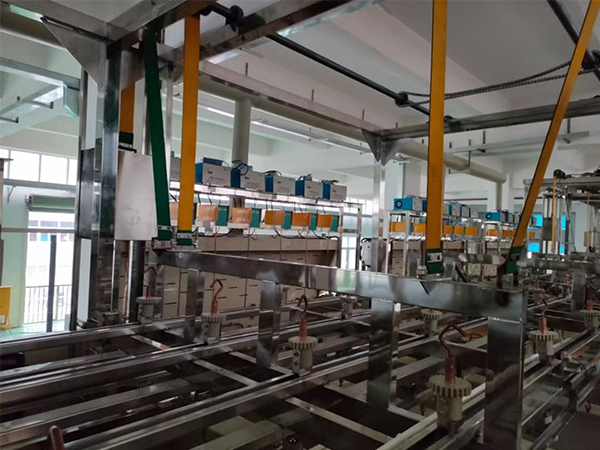
As the core carrier of electroplating processes, electroplating equipment directly determines coating quality, production efficiency and environmental performance. To upgrade the manufacturing process of electroplating equipment, coordinated improvements are required across multiple dimensions including design, materials, machining, intelligentization, quality control and innovation. The specific approaches are as follows:
1. Optimize Design Concepts to Improve Structural Rationality
Design lays the foundation for equipment performance. Combined with the characteristics of electroplating processes, computational fluid dynamics (CFD) simulation is adopted to optimize tank structure and plating solution circulation systems:
Tank geometry shall be designed to eliminate dead zones. Curved transitions or zoned circulation are applied to ensure uniform flow velocity of the plating solution and reduce uneven coating caused by local concentration differences.
Distributed anodes or auxiliary cathodes are used for electrode layout. Coupled with current density simulation, the current distribution on workpiece surfaces is balanced to mitigate edge effects.
Modular design: tanks, filtration systems, power supply units and other components are divided into standardized modules, facilitating later maintenance and process switching (e.g., switching from zinc plating to nickel plating).
2. Select Corrosion-resistant Materials to Guarantee Equipment Durability
Electroplating environments are mostly exposed to corrosive media such as acids, alkalis and salt spray. Material selection directly affects equipment service life and stability:
Core components in contact with plating solution (tanks, pipelines, nozzles) shall preferably adopt titanium alloy, Hastelloy (for heavy corrosion resistance), or PVDF, PPH (acid and alkali resistant engineering plastics) to prevent plating solution contamination and equipment corrosion.
Oxygen-free copper or brass is used for conductive systems, with silver plating or passivation treatment on surfaces to lower contact resistance and reduce power consumption.
Fluororubber or polytetrafluoroethylene (PTFE) is selected for seals to ensure tightness of tanks and pipelines, preventing leakage and volatilization of plating solution.
3. Strengthen Precision Machining and Assembly to Ensure Performance Accuracy
Precision machining is critical for stable equipment operation:
Key parts (such as electrode supports and fixture positioning mechanisms) are processed by 5-axis CNC machining, with dimensional accuracy controlled within ±0.01 mm, and the relative position error between workpieces and electrodes ≤0.5 mm.
Conductive joints adopt laser welding or precision threaded connection, with contact resistance ≤5 mΩ to avoid current fluctuations caused by local overheating.
Tooling fixtures are used for positioning during assembly to guarantee coaxiality and parallelism of all components, reducing vibration and noise during operation.
Improving the process standards of electroplating equipment shall focus on “process adaptability, performance stability, environmental protection and high efficiency”. Through design optimization, material upgrading, precision manufacturing, intelligent control and full-process quality management, deep integration between equipment and electroplating processes can be achieved.